
Welcome to THRILL’s third newsletter!
#3 – SUMMER 2026
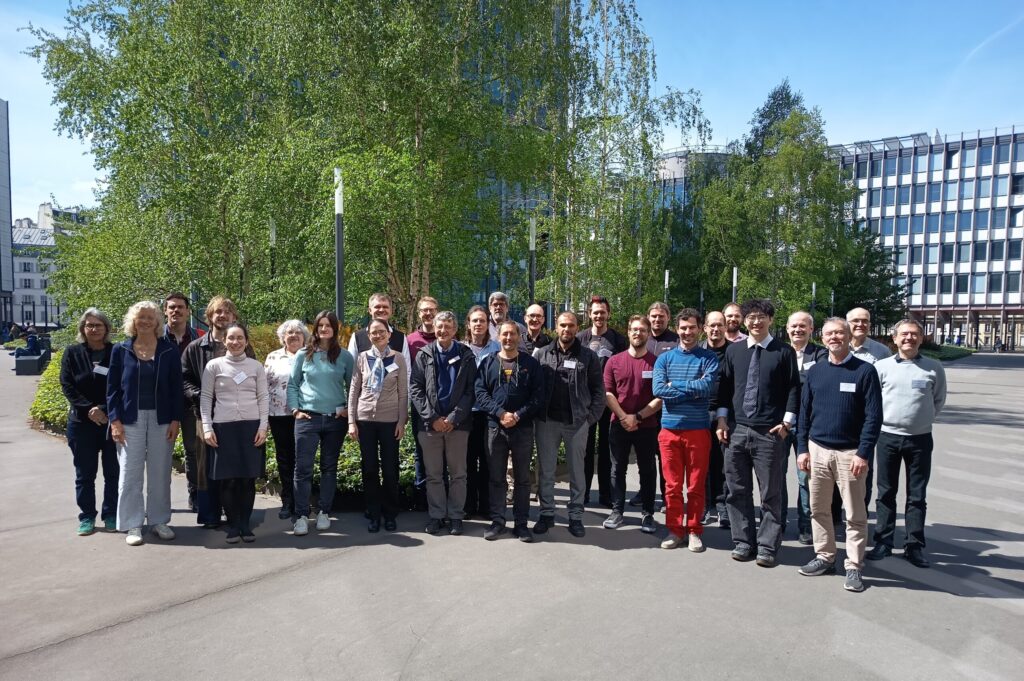
This year, the 4th General Assembly was organised by our French partner CNRS on 14-15 April at Sorbonne University in downtown Paris and in Palaiseau, which gave participants the occasion to visit the Apollon laser facility. As the final in-person meeting of the project, it provided an opportunity to reflect on our results and to look out into the future, discussing new ideas and contributions. In addition, we are thrilled to share that based on preliminary outcomes of THRILL and new impulses in the community, the consortium decided to continue to work together and even expand by welcoming additional members. A new project proposal with new challenges was submitted to the European Commission mid-June.
We remain committed to building on this momentum and hope to continue the THRILL journey beyond 2027!
Enjoy reading!
Vincent Bagnoud, Project coordinator
THRILL Summer School 2026
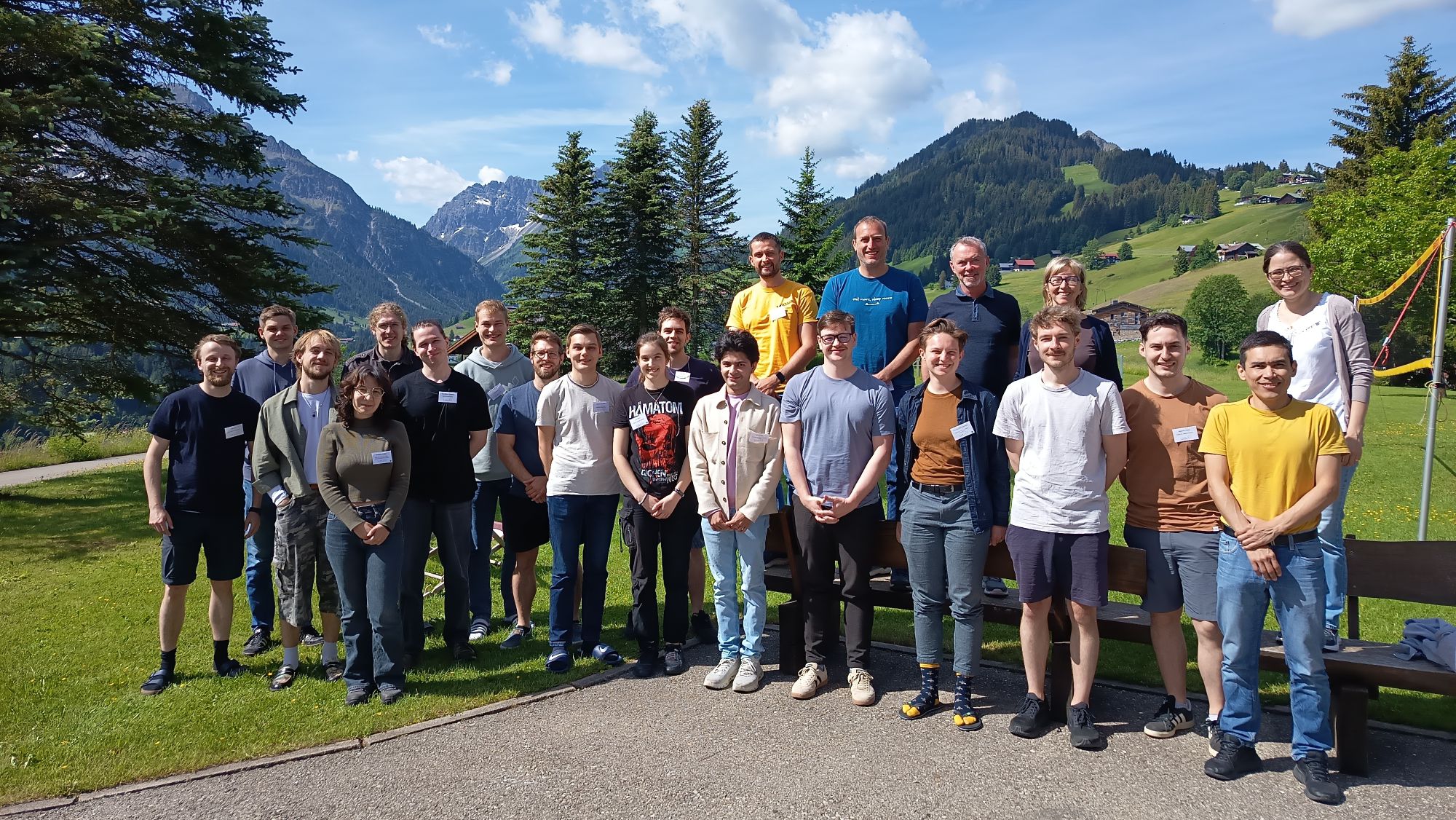
The second summer school organized by the THRILL project took place from 7 to 12 June 2026, in Hirschegg, in the Austrian alps. 16 participants from six European countries from institutions within and outside the THRILL consortium came together in order to explore extreme states of matter generated by high-energy lasers. Ranging from warm dense matter and laser shocks to inertial fusion energy and laboratory astrophysics, they also delved into advanced topics like nuclear photonics and laser-driven secondary radiation sources of particles and radiation.

2025 in review: THRILL project highlights
After three years in motion, the THRILL consortium is pleased to report on its most recent achievements and highlights, including four new publications and several training events.
In the final year of the project, all work packages make good progress towards the project objective: delivering new schemes and devices for pushing forward the limits of research infrastructures of European relevance and ESFRI landmarks.
THRILL laser physicist Yannik Zobus secures funding for young investigators group “LASE-FUSE”
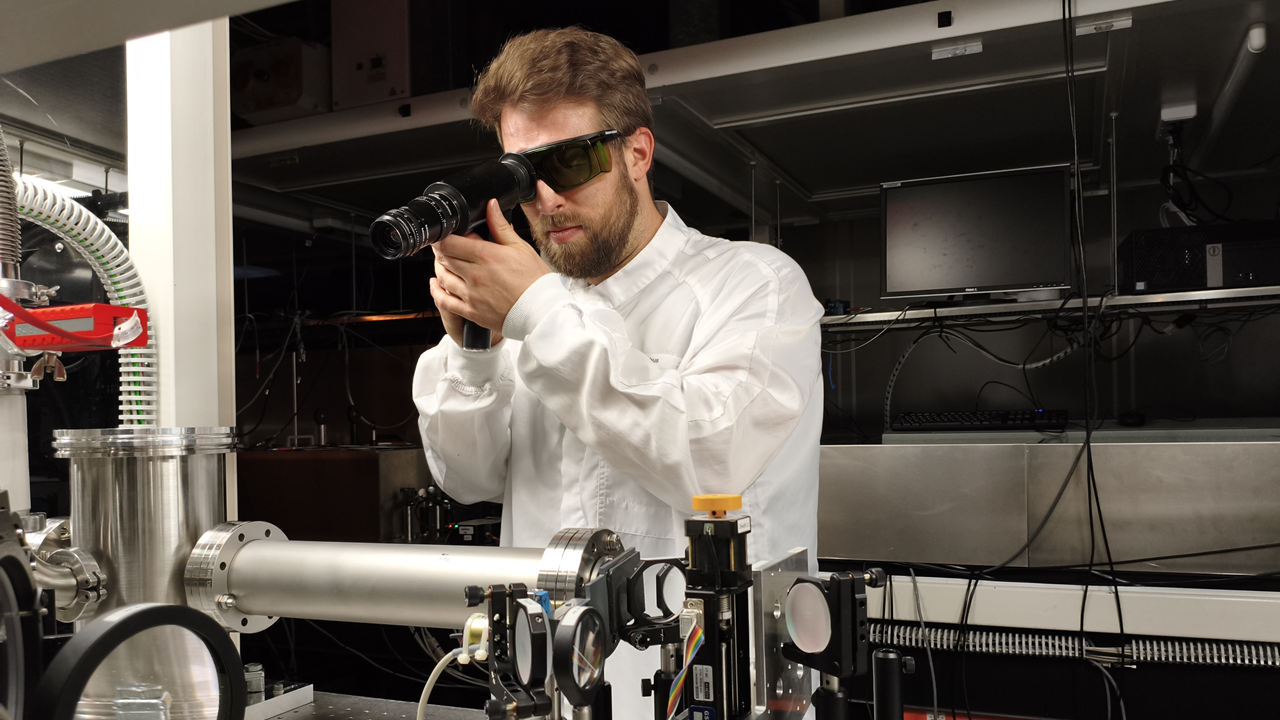
Research activities emerging from the THRILL project continue to gain momentum: On 1 May 2026, Yannik Zobus, a laser physicist working on the THRILL project at GSI/FAIR in Darmstadt, launched the new fusion initiative “LASE-FUSE” (LAser Simulation for Enhanced FUSion Efficiency). As part of Germany’s BMFTR “Fusionstalente” (Fusion Talents) funding program, the project will receive three million euros in funding over five years.
9
Partners
5
Countries
4
Years
10.4M
Budget
#YoungScientists
With our interview series “Young Scientists at THRILL”, we portrait the younger generation of researchers working on our project. They tell us about their roles in the project and what inspires them about their work.
Meet Pierre Lebegue, a PhD student at the LCF and LULI (France)

Meet Yannik Zobus, laser physicist at GSI/FAIR in Darmstadt (GERMANY)

Within THRILL, a team of developers is working on OPOSSUM. Its objective is the development of a common software platform for simulating various aspects of optical systems in a holistic approach. It should be particularly useful for simulating and designing large-size, high-energy / intensity laser systems.
OPOSSUM 0.7.0:
A major leap forward with a new graphical interface
We are thrilled to announce the release of OPOSSUM 0.7.0, which marks a significant milestone in the software’s history. For the first time, OPOSSUM includes a graphical user interface (GUI), transitioning the tool from a pure Rust library and command line interface (CLI) into a visual environment accessible to a much broader audience.
New publications
Wang, J. et al. (2026). “Patch-MLP-based predictive control: simulation of upstream pointing stabilization for PHELIX laser system“, Mach. Learn.: Sci. Technol. 7, 015023. doi:10.1088/2632-2153/ae393d
A full list of THRILL’s publications, presentations, and posters can be found on the publication’s page.
Consortium
Our project consortium is composed of nine partners from five countries, plus ESRF as observer.

