

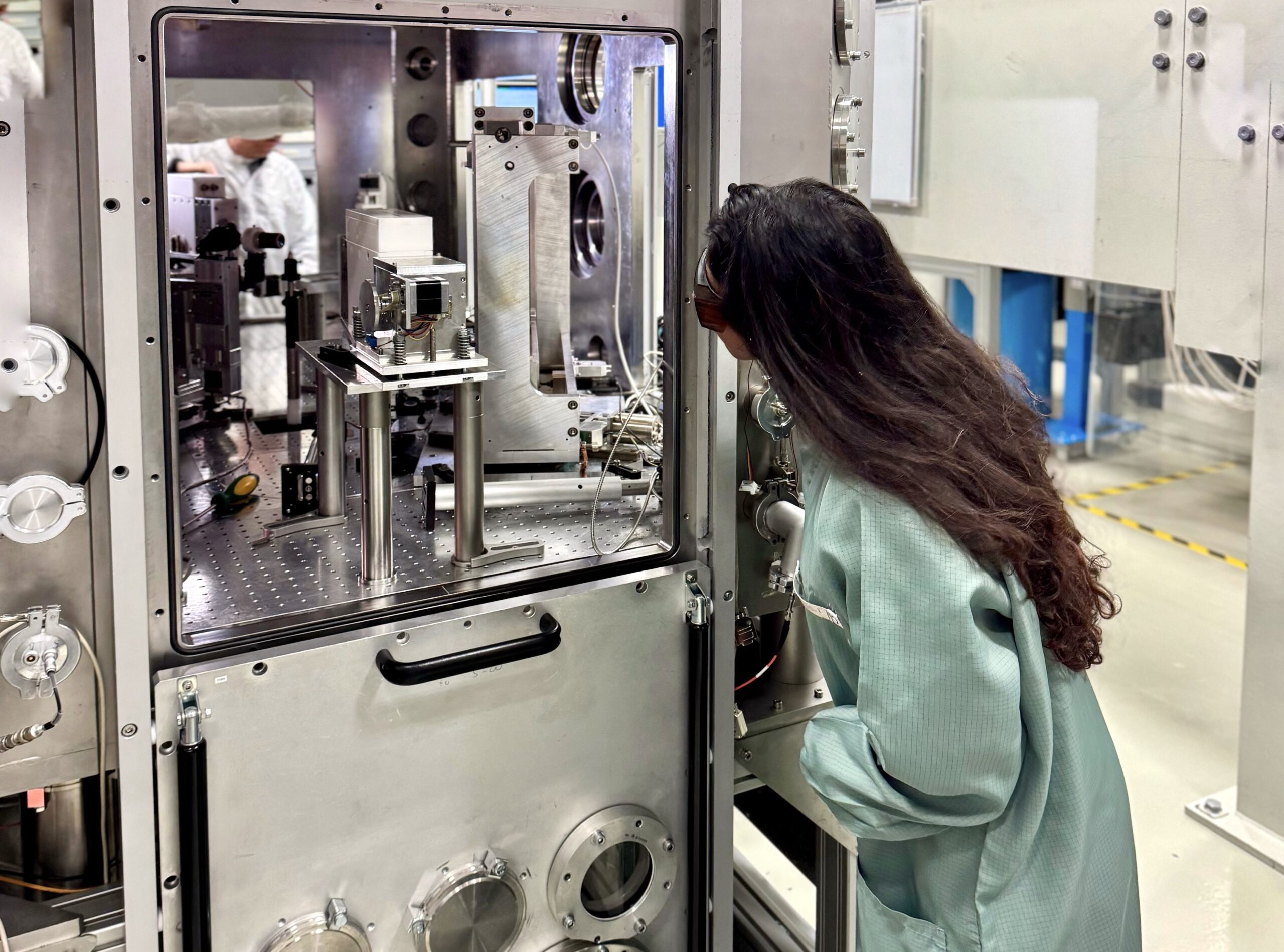
“You learn a lot from what doesn’t work, sometimes even more than from what does”
Meet Swathi Krishna, physicist and part of the OPOSSUM team at THRILL, working on open-source optics simulation software for modelling and analyzing complex optical systems.
Hi Swathi, please tell us more about your background and what you are working on.
Hi, I’m Swathi Krishna. I’m a physicist, and I’ve recently joined the THRILL project at GSI. I’m part of the OPOSSUM team, working on open-source optics simulation software for modelling and analyzing complex optical systems. I’m mainly involved in supporting the development, documentation, and testing of the OPOSSUM software. What I find really exciting is being part of developing something like a digital twin for complex laser systems. Instead of just building things and seeing what happens, we can simulate multiple effects, including beam paths, temperature stability, and ghost focus formation, all at the same time, and understand how the whole system behaves before it even exists in real life. For me, this combination of real physics and practical software development is what makes this work so interesting. It feels like we’re working on a project that has the potential to genuinely redefine how these experiments are designed and carried out.
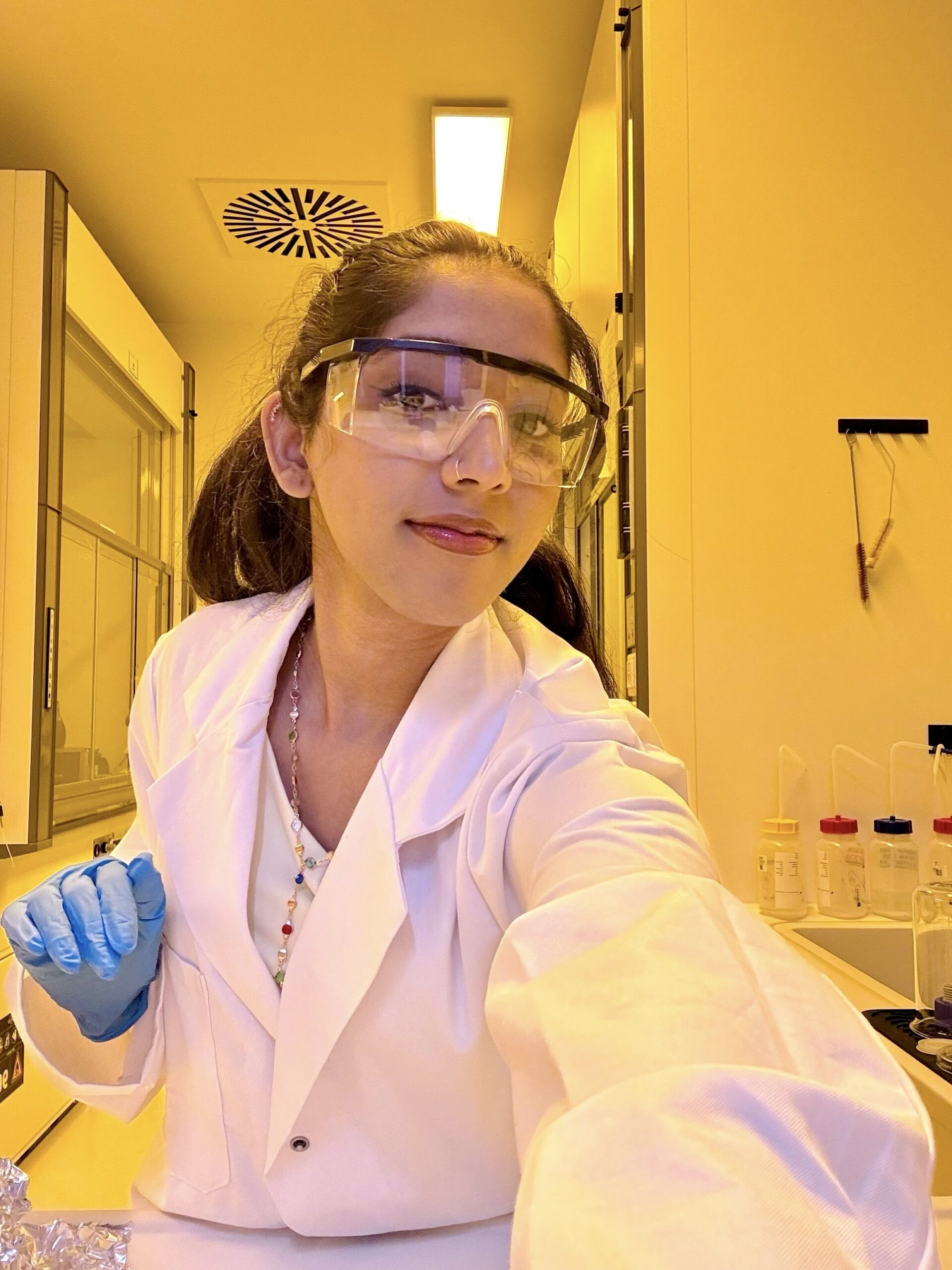
“For me, the combination of real physics and practical software development is what makes this work so interesting. It feels like we’re working on a project that has the potential to genuinely redefine how these experiments are designed and carried out.”
How did you find out what your path was after school?
Physics was always my favorite subject at school because it made everything around me start making sense. It felt like the subject that sits at the root of everything. After school, I didn’t really have one clear “this is my path” moment. It was more that I kept following what I genuinely enjoyed. The more I studied physics, the more I realized I liked both understanding things deeply and also explaining them to others. Over time, I naturally moved towards research and teaching. It just never felt boring to me, there’s always something new to figure out or understand. And I think that’s how I found my direction, by simply sticking with what kept me curious.
“What really fascinates me is how extreme laser systems can be used to recreate conditions similar to those inside stars.”
What’s currently your favorite tech topic and why?
Right now, one of the most interesting topics for me is laser-induced nuclear fusion. What really fascinates me is how extreme laser systems can be used to recreate conditions similar to those inside stars. It feels amazing to think that with the right control and understanding, we can study such extreme physics in a lab setting and there is still so much to explore in how to make it more precise and efficient.
What’s your most important learning in your career?
For me, I’ve just started my journey, whether in life or career, but one thing I’m already learning is to take every chance that comes my way. It doesn’t matter how ready or perfect you feel for it. I’ve realized you’re rarely ever “fully ready” for things, and you don’t have to be. What matters more is just starting anyway, even if you feel a bit unsure. I think growth really comes from those moments where you say yes, even without perfect confidence.
“I’ve realized you’re rarely ever ‘fully ready’ for things, and you don’t have to be. What matters more is just starting anyway, even if you feel a bit unsure. I think growth really comes from those moments where you say yes, even without perfect confidence.”
What has been your biggest challenge in working in science so far?
I think my biggest challenge so far has been the way science, education, and work are approached differently in different places, and then adapting to that after coming from a different country. It takes a bit of time to find your place, to understand how things are done, and to get used to the way people communicate and work together. But I think that process itself is really valuable. It pushes you to grow, be more open, and slowly build confidence in a new environment. You learn a lot from what doesn’t work, sometimes even more than from what does.
Thank you for the interview, Swathi!
__
Subscribe to our newsletter and follow us on LinkedIn to learn more about our work at THRILL, and stay updated on our advances!
